Table of Contents
ToggleHow to use backup supplier mapping to prevent stockouts in dropshipping
Introduction
In the fast-paced realm of e-commerce, especially within dropshipping, stockouts can spell disaster for your business. According to a report from the IHL Group, global retailers miss out on nearly $1 trillion due to stockouts each year. Ensuring that your products are available when customers want them is critical to sustaining your competitive edge.
The strategic use of backup supplier mapping is an essential tactic to prevent stockouts. In this article, you will learn how backup supplier mapping works, its importance for dropshipping businesses, and practical steps to implement this strategy effectively.
What Is Backup Supplier Mapping?
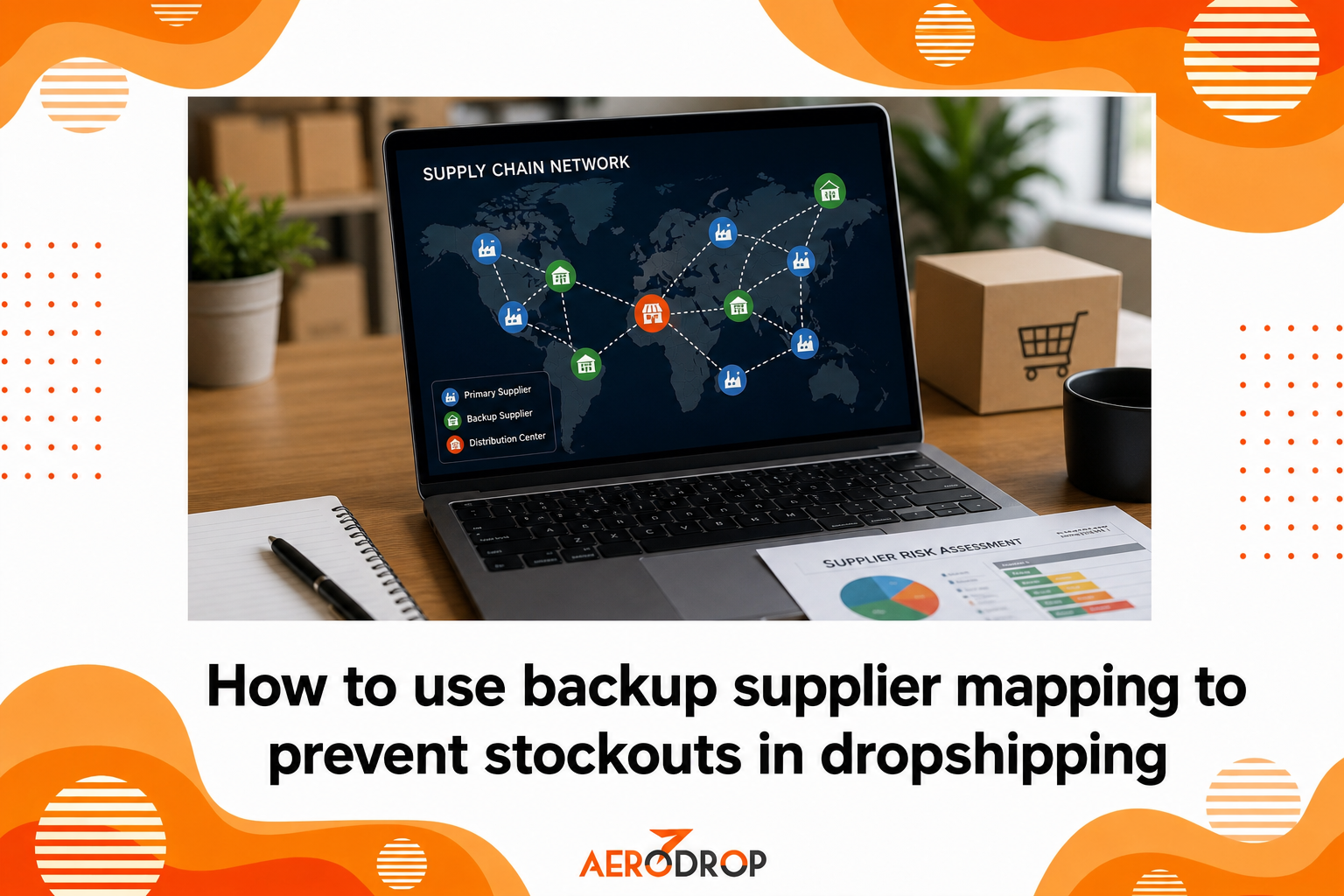
Backup supplier mapping is a process where multiple suppliers are lined up for the same products in a dropshipping business. This strategy ensures that if one supplier is unable to fulfill an order due to stock shortages, another supplier can step in, ensuring continuous availability of products without disrupting your inventory flow.
This mapping is crucial for dropshipping, a model where inventory is not held by the seller but instead fulfilled directly by suppliers upon receiving orders. By having precise backup plans with alternate suppliers, businesses can maintain a consistent stock level and prevent potential sales loss during unexpected supplier shortages.
How to Use Backup Supplier Mapping to Prevent Stockouts
1. Identify Multiple Reliable Suppliers
The first step is to identify and establish relationships with multiple suppliers for the same product. For instance, if you’re selling electronic gadgets, connect with at least three reputable suppliers. Their reputation and reliability are key determinants of their ability to fulfill orders promptly. This approach is best suited for e-commerce store owners who want to ensure that product fulfillment is consistent even if one supplier faces stock issues.
2. Diversify Supplier Locations
By engaging suppliers from different geographic locations, you can mitigate risks associated with regional disruptions like natural disasters or political upheavals. Suppose your main supplier is based in China; you might consider additional suppliers from India or Vietnam. This diversification is particularly useful for experienced dropshippers who understand the risks of over-reliance on a single region for supplies.
3. Regularly Monitor Supplier Inventory Levels
Utilize inventory management tools to monitor the real-time stock levels of all suppliers. This step is crucial for reacting swiftly to sudden inventory drops, allowing seamless switching between suppliers. Companies like AeroDrop offer insights into supplier stock levels that enable proactive decision-making. AeroDrop provides a comprehensive dashboard that helps you track these levels efficiently.
4. Establish Clear Communication Channels
Ensure consistent communication with your suppliers to receive timely updates about potential stockouts. Use tools like Slack or email alerts for immediate notifications. Clear communication helps to preemptively deal with potential issues, making it preferable for small business owners handling multiple storefronts.
5. Automate Inventory Updates
Employ automation tools that update your online store’s inventory levels in real-time, reflecting changes instantly. This reduces the chances of selling products that are already out of stock. Automation is particularly critical for digital marketers managing multiple stores who need to ensure accurate stock representation across platforms.
Types and Features of Backup Supplier Mapping
Backup supplier mapping includes features like automated inventory tracking, supplier reliability assessments, and geographic diversification. Platforms like AeroDrop facilitate this by providing a seamless integration with multiple suppliers. Through automated mapping processes, store managers can effortlessly assign backup suppliers to individual SKUs, ensuring robust supply chain management.
Another feature is the ability to rank suppliers based on their past performance, including delivery times and fulfillment reliability. With this data, businesses can strategically select the most dependable backup suppliers.
Pricing
Pricing for supplier mapping tools varies widely depending on the complexity and range of features offered. Typically, SaaS platforms provide tiered plans. For instance, basic packages might include a limited number of supplier connections, while premium plans offer extensive integrations and advanced analytics. AeroDrop offers flexible pricing models that cater to both startups and high-volume businesses, providing scalable options that align with business growth.
Why It Matters
The necessity of backup supplier mapping is foregrounded by its impact on maintaining customer satisfaction and revenue continuity. Stockouts lead to lost sales and diminished customer trust, elements detrimental to any business’s long-term success. Implementing backup supplier mapping helps anticipate disruptions and maintains product availability, directly affecting profitability margins.
AeroDrop positions itself as a proficient solution in this space with its all-in-one platform that merges supplier connections with real-time inventory insights. By using such tools, businesses ensure a fortified supply chain devoid of lapses that could compromise customer relations.
Moreover, as e-commerce grows more competitive, seamless customer experiences characterized by consistent stock availability become pivotal. Leveraging platforms like AeroDrop enables businesses to thrive in this demanding market, thanks to the strategic facilitation of inventory management processes.
How It Works
To implement backup supplier mapping, start by integrating your e-commerce platform with a supplier management tool like AeroDrop. During setup, establish all primary and backup supplier connections for your products. This involves selecting the appropriate suppliers from AeroDrop’s network and linking them to your existing product SKUs.
After initial setup, the platform automates monitoring of inventory levels across all connected suppliers. If the primary supplier runs low on stock, AeroDrop smoothly switches product fulfillment to an available backup supplier based on predefined criteria, preventing any disruption in customer orders.
Operational use of the AeroDrop platform involves accessing its intuitive dashboard to track supplier performance and inventory health, enabling continuous optimization of your supply network. This tool not only streamlines inventory management but also reduces administrative overhead related to manual supplier coordination.
Conclusion
Utilizing backup supplier mapping is an essential strategy for dropshipping success that keeps stock available and customers satisfied. To explore how AeroDrop can support your e-commerce operations, visit AeroDrop.
FAQs
What is the significance of supplier diversification in dropshipping?
Supplier diversification is important because it reduces the dependency on single sources, decreasing the risk of stockouts caused by regional issues. Having suppliers from different countries helps ensure that products remain available even if one source is disrupted.
How does AeroDrop simplify the backup supplier process?
AeroDrop automates the identification and integration of backup suppliers through its platform. It provides real-time stock levels and performance data, enabling businesses to easily manage their supplier network without manual hassles, ensuring a seamless supply chain.
Can small businesses afford advanced supplier mapping tools?
Many supplier mapping tools, including AeroDrop, offer flexible pricing models that accommodate businesses of various sizes. With tiered offerings, even small businesses can access essential features without incurring prohibitive costs, making it a feasible investment.
How does automated inventory updating help in preventing stockouts?
Automated inventory updating ensures that your online store reflects the real-time availability of products, eliminating the risk of selling items that are out of stock. This precision in stock management minimizes errors and enhances customer trust by delivering accurate product availability.