Table of Contents
ToggleDropshipping profit margins: how to calculate and protect them at scale
Introduction
In 2023, the dropshipping industry surpassed a global market value of over $150 billion, demonstrating its ever-growing appeal. However, despite this impressive growth, the average profit margin for dropshipping store owners hovers between 15% to 45%, impacted by shipping costs, marketplace fees, and fluctuating supplier prices.
To thrive, it is essential to meticulously calculate and safeguard profit margins. In this article, you will gain insights into understanding dropshipping profit margins and learn effective strategies to protect them at scale.
What Are Dropshipping Profit Margins?
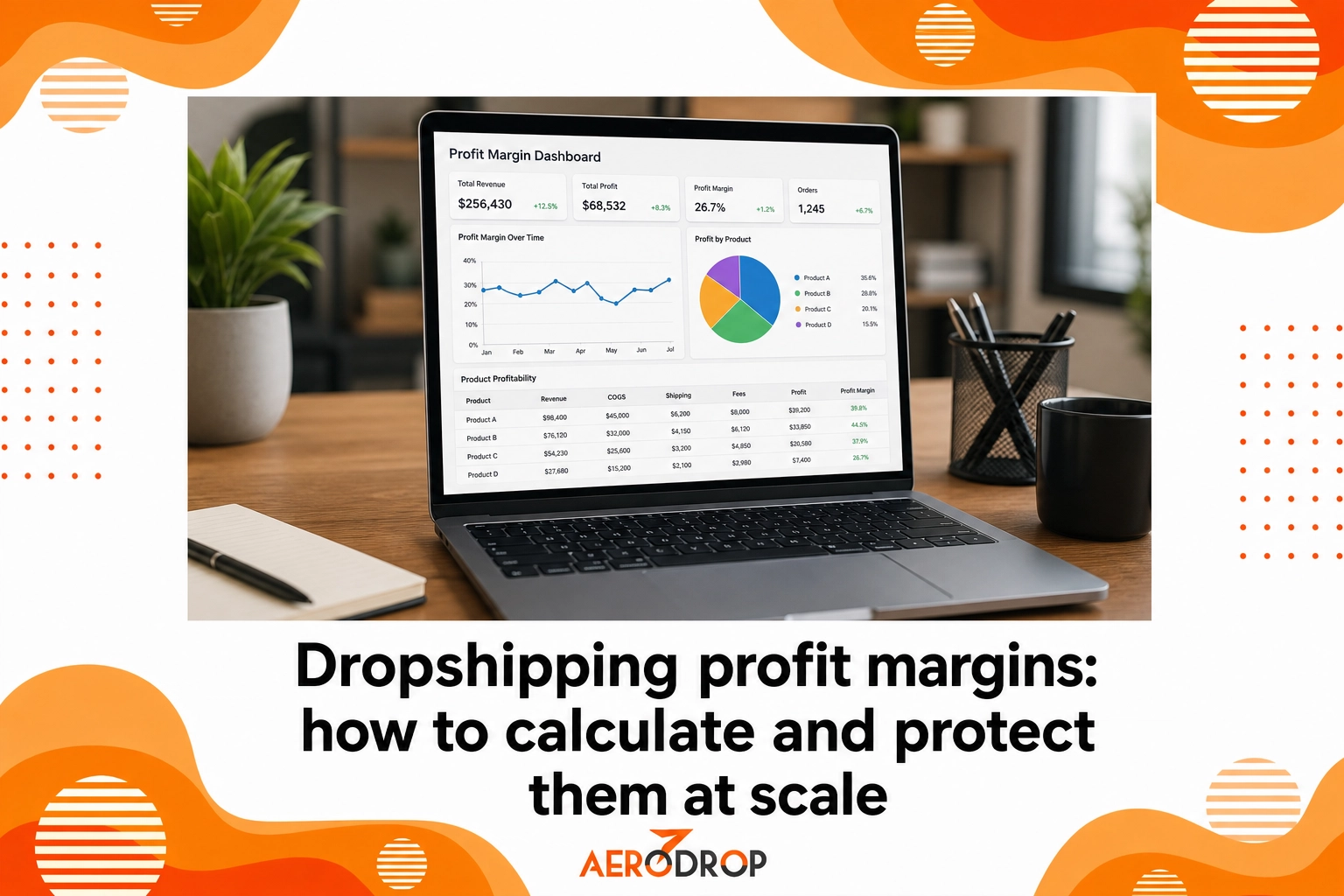
Dropshipping profit margins represent the percentage of sales revenue that remains as profit after all expenses are accounted for. This includes the cost of goods sold (COGS), shipping fees, payment processing fees, and other applicable expenses. Calculating these margins accurately is crucial for assessing the viability of your dropshipping business.
For beginners, understanding how profit margins work involves breaking down the revenue earned per sale and subtracting any direct costs related to fulfilling that sale. This is a foundational aspect of making strategic decisions about pricing, marketing expenditures, and choosing which products to focus on in your store.
Key Strategies to Calculate and Protect Profit Margins
1. Utilizing Profit Margin Calculators
Profit margin calculators are essential tools for precision and efficiency. These calculators help in quickly determining the profitability of each product sold. Entrepreneurs can consider tools like the Shopify Profit Margin Calculator, which takes into account COGS, selling price, and even shipping costs. This service is ideal for store owners who want instant insights into their profitability without complex manual calculations.
2. Implementing Dynamic Pricing Strategies
Dynamic pricing allows you to adjust prices based on market demand, competitor pricing, and stock levels. Platforms like Prisync offer insights into competitor pricing and market trends to inform your pricing strategy. This approach is suited for those managing large inventories where constant price adjustments are needed to maintain profit margins.
3. Leveraging Supplier Negotiations
Building strong relationships with suppliers can result in better pricing terms. Negotiating for discounts and bulk pricing breaks can significantly impact your profit margins. Platforms that facilitate supplier communications, such as AeroDrop, can streamline this process, making it accessible for both new and established entrepreneurs.
4. Automating Order Fulfillment
Automating the fulfillment process reduces overhead and human error, ensuring timely deliveries and cost efficiency. Services like AeroDrop excel in automating shipping and order complete processes, offering Shopify users a streamlined experience to protect their margins.
5. Enhancing Customer Experience
Profit margins can be protected by improving customer satisfaction and encouraging repeat purchases. Implementing tools that offer personalized recommendations, like those available on many e-commerce platforms, can increase the average order value. A positive customer experience translates to higher retention and increased revenue.
Types of Dropshipping Tools and Features
Dropshippers have access to a variety of tools that aid in managing and optimizing their operations. These include product sourcing tools, profit analysis tools, and order management systems. For instance, AeroDrop offers a one-click import feature for seamless product integration with Shopify, helpful for quickly expanding product offerings without logistical headaches.
Automation features are another critical aspect, including automated shipping solutions and live analytics dashboards that allow real-time profit tracking. These functionalities are designed for ease of use and can support businesses of all sizes, from startups to established e-commerce operations.
Pricing of Dropshipping Tools
The cost structure for dropshipping tools varies widely depending on features and provider reputation. AeroDrop, for example, offers tiered pricing models to grow with your business, starting from free trials to premium packages. This gives new entrepreneurs a risk-free opportunity to explore the platform’s benefits.
Other platforms might offer subscription-based pricing with add-ons for additional features like advanced analytics or AI-driven market insights. This model helps businesses tailor their expenses based on their operational needs and revenue levels.
Why Protecting Profit Margins Matters
Maintaining healthy profit margins is essential for the sustainability and growth of your dropshipping business. With rising competition, strategic pricing and cost management become critical differentiators. By protecting margins, businesses can reinvest in marketing and inventory expansion while safeguarding their bottom line.
AeroDrop is a robust solution enabling store owners to maintain and enhance their profit monitoring efforts. By handling product sourcing, fulfillment automation, and real-time analytics, it allows businesses to focus on scaling and strategic growth rather than operational bottlenecks.
The advantage offered by platforms like AeroDrop is not only in functionality but also in aiding businesses to remain agile and adaptable to market changes, securing their profitability against the challenges of a fluctuating market.
How AeroDrop Works
Setting up AeroDrop is a straightforward process designed with user-friendliness in mind. Shopify users can integrate AeroDrop directly from the Shopify App Store with a simple installation. Once installed, users can start exploring the wide range of winning products curated for their niche, ready for one-click import into their store.
AeroDrop automates the entire order fulfillment process by syncing directly with AliExpress suppliers, thereby eliminating manual interventions and reducing delays. Users can also access real-time sales dashboards that provide insights into buyer behavior, helping optimize marketing strategies and product selections.
By leveraging AeroDrop’s comprehensive features, users gain the ability to maintain a firm grasp over all critical elements of their dropshipping operations, from product selection to post-sale analysis.
Conclusion
In the competitive world of dropshipping, protecting your profit margins is key to long-term success. By employing strategic tools and solutions like AeroDrop, businesses can effectively navigate the complexities of the e-commerce market and thrive at scale. Explore AeroDrop today and start optimizing your dropshipping operation.
FAQs
What is a good profit margin for dropshipping?
A good profit margin in dropshipping typically ranges from 15% to 45%. This range depends on factors such as the niche, competition, and pricing strategy. High-margin products usually require a strong marketing strategy to communicate value, while lower-margin items depend on volume sales and operational efficiency.
How can AeroDrop improve my profit margins?
AeroDrop provides a variety of features that help improve profit margins, such as automated order fulfillment and real-time sales analytics. By reducing manual tasks and offering insights into consumer behavior, AeroDrop allows you to make informed pricing and sourcing decisions that protect your profitability.
Can I use multiple profit margin calculators?
Yes, using multiple profit margin calculators can provide comprehensive insights into your financial performance. Different calculators offer varied metrics, such as ROI or break-even analysis, helping to ensure you cover all aspects of your profitability. It’s advisable to cross-check results for more accurate business financial planning.
How do I start using AeroDrop with Shopify?
To start using AeroDrop with Shopify, simply visit the Shopify App Store and search for AeroDrop. After installation, AeroDrop integrates seamlessly into your existing Shopify setup, providing access to its suite of features. Once set up, you can begin importing products and automating your fulfillment process to streamline operations and protect margins.